







For years, virtual assets such as cryptocurrencies operated largely outside Zimbabwe's formal regulatory system, with businesses and investors navigating a sector that had little regulatory clarity.
That is beginning to change.
New regulations governing Virtual Asset Service Providers, together with ongoing consultations by the Securities and Exchange Commission of Zimbabwe, signal a major shift in how the country approaches digital assets and the growing digital finance economy.
The changes come as interest in cryptocurrencies, blockchain technology and other digital financial products continues to grow across the world and within the region.
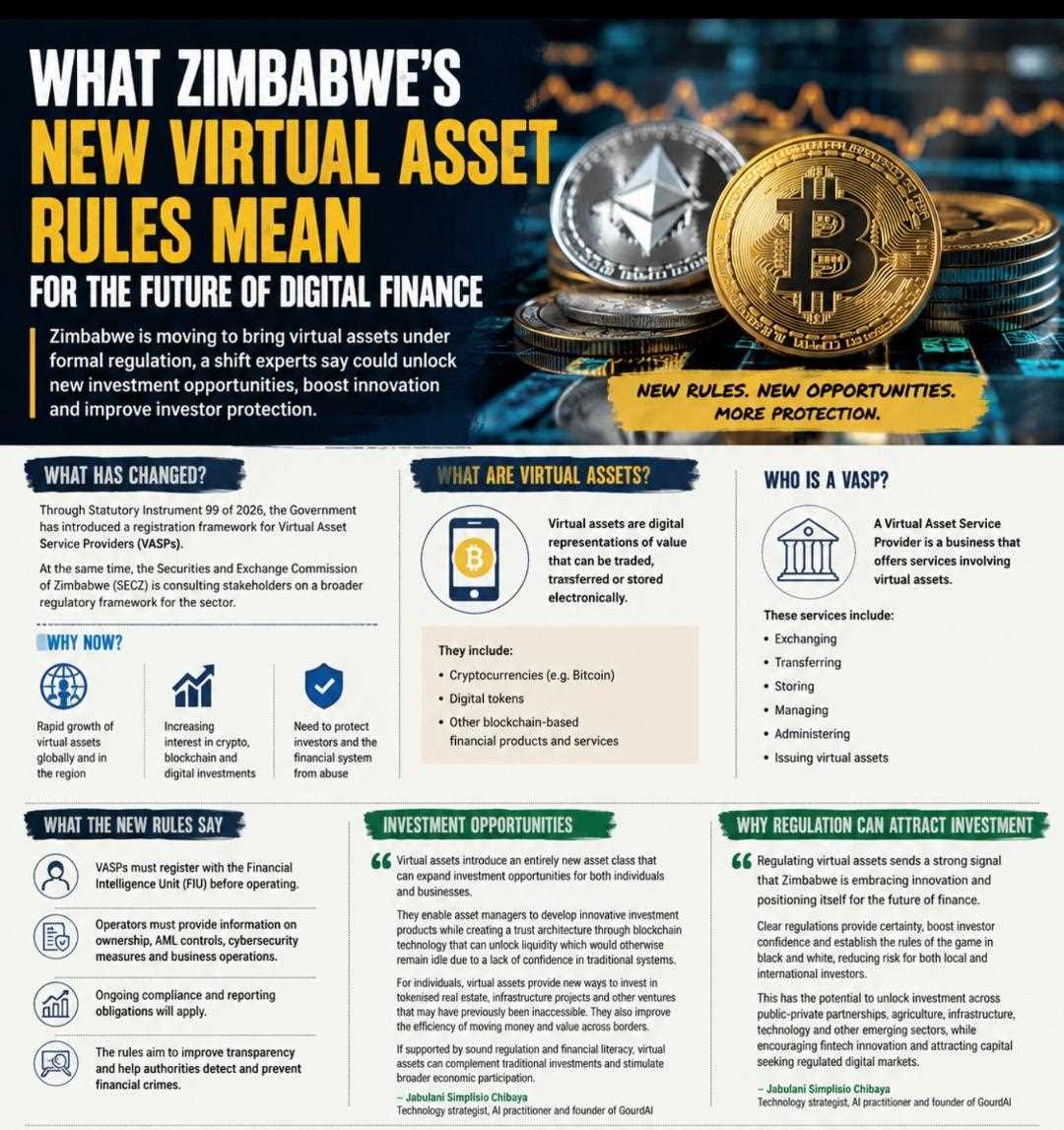
Virtual assets are digital representations of value that can be traded, transferred or stored electronically. While many people associate them with cryptocurrencies such as Bitcoin, the sector also includes digital tokens and other blockchain-based financial products and services.
Zimbabwe recently introduced Statutory Instrument 99 of 2026, establishing a registration framework for businesses that provide virtual asset services.
At the same time, SECZim is consulting stakeholders as it develops a broader regulatory and supervisory framework for the sector following amendments to the Securities and Exchange Act under Finance Act No. 7 of 2025, which gave the Commission the mandate to regulate VASPs.
Speaking to Zim Now, SECZim AML Supervision & Surveillance Officer Providence Chikarakara said the move reflects the rapid growth of the virtual asset ecosystem globally and the increasing public interest in digital financial innovations.
"The virtual asset ecosystem has continued to evolve rapidly both globally and within the region, with increasing public interest in virtual assets, blockchain technology, digital investment products and related financial innovations," he said.
Chikarakara said stakeholder engagement is intended to ensure that future regulations reflect market realities and developments taking place within the sector.
"The objective is to obtain input from stakeholders so that the emerging framework adequately reflects practical realities, evolving market developments and the activities currently taking place within the sector," he said.
One of the biggest changes is that businesses offering virtual asset services will no longer be able to operate without oversight.
A Virtual Asset Service Provider is a business that facilitates activities involving virtual assets. These include exchanging, transferring, storing, managing, administering or issuing digital assets.
According to legal practitioner Simbarashe Mariwande, the new regulations represent one of the most significant developments for the sector in Zimbabwe.
"For years, Zimbabwe's virtual asset industry operated in a legal grey area. That position has now fundamentally changed," he said.
Under the new framework, VASPs fall under the supervision of the Financial Intelligence Unit (FIU) and must register before operating.
Mariwande said operators will be required to meet various compliance obligations, including anti-money laundering controls, cybersecurity safeguards and reporting requirements. The regulations are also intended to improve transparency and make it easier for authorities to monitor suspicious transactions and illicit financial activities.
While much of the discussion around virtual assets focuses on risks, experts believe the technology could also open new investment opportunities for Zimbabwe.
Technology strategist and AI practitioner Jabulani Simplisio Chibaya said virtual assets introduce an entirely new asset class that could expand investment opportunities for both individuals and businesses.
Related Stories
"They enable asset managers to develop innovative investment products while creating a trust architecture through blockchain technology that can unlock liquidity which would otherwise remain idle due to a lack of confidence in traditional systems," he said.
Chibaya said virtual assets could allow ordinary Zimbabweans to participate in investments such as tokenised real estate, infrastructure projects and other ventures that may previously have been beyond their reach.
He added that the technology could also make it easier to move money across borders, raise capital and participate in the global digital economy.
According to Chibaya, a clear regulatory framework could also attract both local and foreign investment.
"Clear regulations provide certainty, boost investor confidence and establish the rules of the game in black and white, reducing risk for both local and international investors," he said.
He said stronger regulation has the potential to unlock investment across sectors such as agriculture, infrastructure, technology and public-private partnerships while encouraging fintech innovation and strengthening Zimbabwe's competitiveness in the global digital economy.
However, the opportunities come with significant risks.
According to SECZIM concerns include fraud, scams, misleading promotions, cybercrime, money laundering, terrorist financing and consumer losses.
"There are also broader concerns relating to consumer awareness and understanding of the risks associated with virtual asset investments and services," said Chitambara.
Investor protection remains one of the central goals of the proposed regulatory framework.
SECZIM says it is considering licensing requirements, governance standards, disclosure obligations, cybersecurity safeguards, anti-money laundering measures, risk management systems and mechanisms for handling complaints and misconduct.
The Commission is also exploring risk-based capital requirements to ensure operators have sufficient financial resources to support their activities and protect consumers.
Business development and legal expert Taonesesa said the framework signals Zimbabwe's recognition that digital assets are becoming part of the modern financial system.
"The new regulations recognise that digital assets are becoming part of the modern financial landscape and seek to bring them into a regulated environment," she said.
She said regulation could improve transparency, accountability and investor confidence while supporting responsible innovation.
However, she cautioned that regulation alone will not remove all risks.
"Digital assets remain vulnerable to market volatility, cybercrime, scams and technological failures," she said.
Mariwande also warned that registration should not be viewed as a guarantee that virtual assets are safe investments.
As Zimbabwe develops its virtual asset framework, regulators face the challenge of encouraging innovation while protecting investors and maintaining confidence in the financial system.
For now, SECZ says consultations are continuing and will help shape regulations that are practical, proportionate and responsive to developments within the sector.








Leave Comments